From Slurry to Water, Sand & Stone
Inside the closed-loop process that turns hydrovac waste into three recovered resources — at a BC Ministry of Environment–licensed facility in Langley.
How is hydrovac slurry recycled?
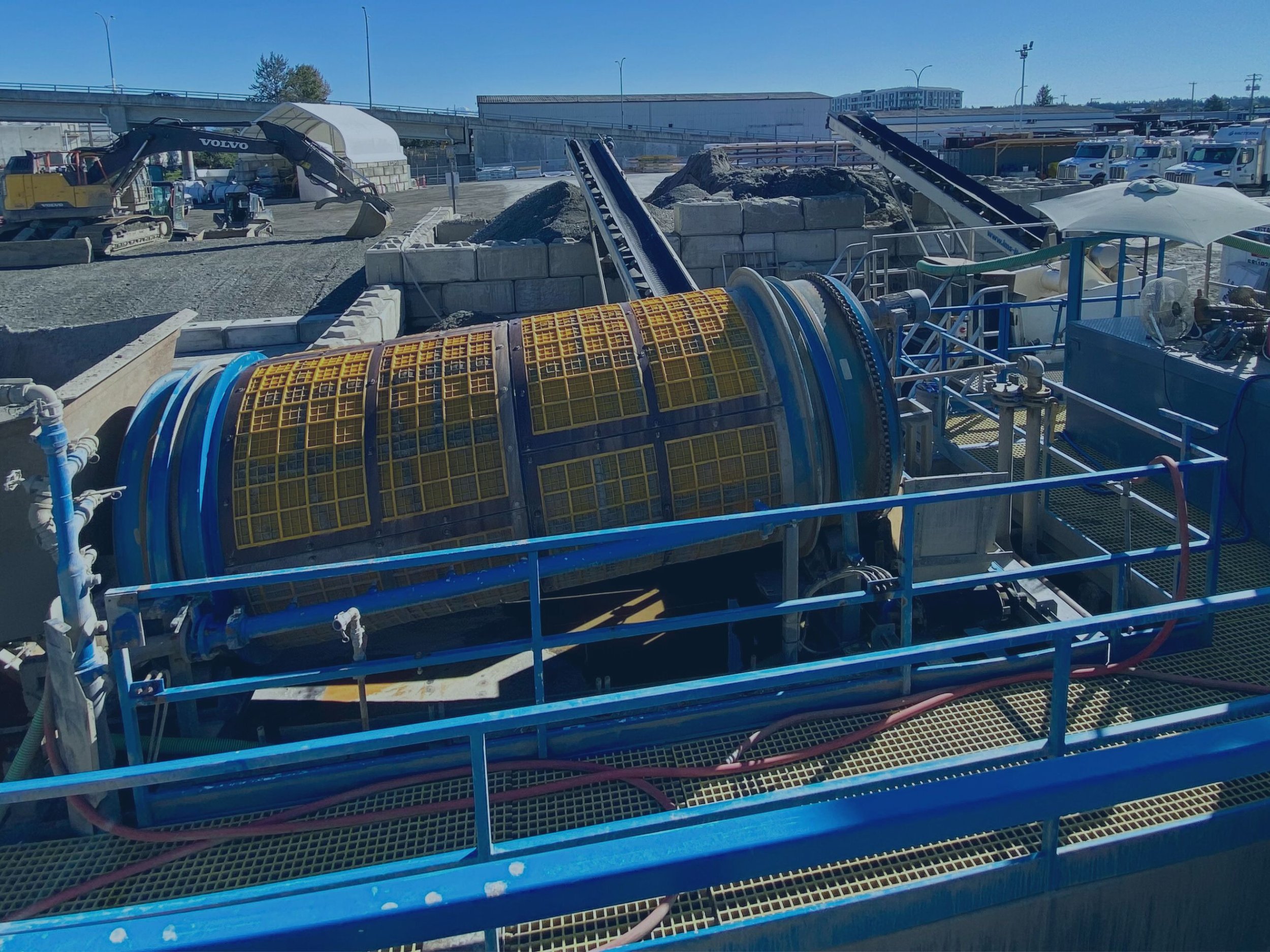
Hydrovac slurry is recycled by separating it back into the materials it came from. At Arvia's Langley facility, each load is tested, then processed on fully contained concrete pads through engineered separation that recovers three products: clean water, recycled sand, and reusable rock aggregate. This closed loop replaces the traditional dewater-and-landfill approach — instead of burying the solids and losing the water, both are returned to productive use. To September 2026, the process has recovered more than 67 million litres of water, 98,000 tonnes of sand, and 123,000 tonnes of aggregate from slurry dropped off by hydrovac contractors across the Lower Mainland and Fraser Valley.
What happens to each load?
Receive & test
Hydrovac loads arrive at the licensed Langley facility and are unloaded onto engineered concrete pads built for 100% containment. Every load is characterized and tested before it enters the recycling stream.
Engineered separation
The slurry — a wet mix of water, sand, silt, clay, and rock — is run through engineered separation that splits it into its recoverable components rather than dewatering it for landfill.
Three recovered products
Out the other side: clean reclaimed water, screened recycled sand, and rock processed into construction-ready aggregate. Little or nothing is left to bury.
Three products out. Minimal landfill.
Clean water
Reclaimed from every load instead of being lost to a landfill cell.
Recycled sand
Screened and recovered for reuse on non-ALR construction projects.
Reusable aggregate
Rock and gravel processed into construction-ready backfill material.
Litres of water recovered
Tonnes of sand recovered
Tonnes of aggregates recovered
Be part of the loop.
Drop off slurry at the Langley facility, or buy back the recovered sand and aggregate for your next project.